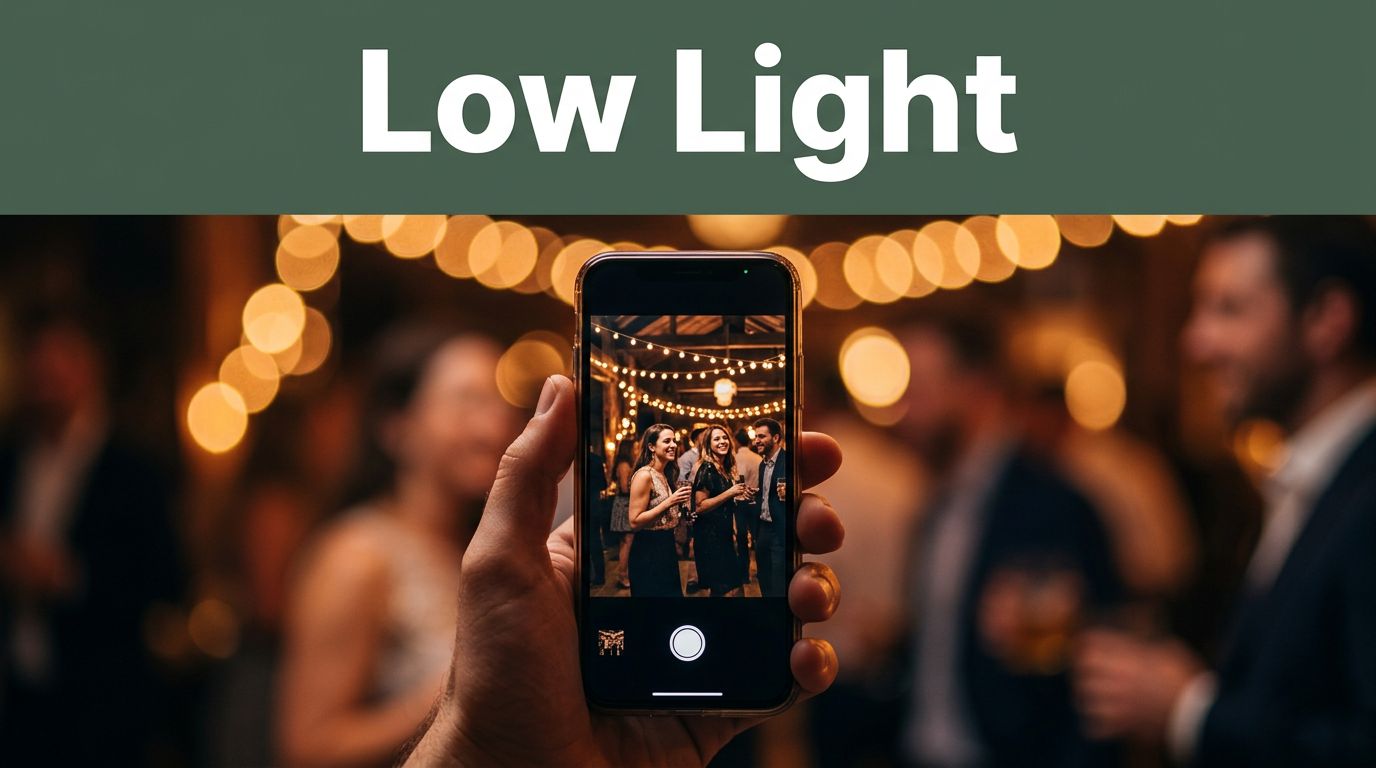
You grab your phone at a dimly lit party. Everyone laughs and chats, but your shots come out blurry messes or harsh with flash. Sunsets turn muddy too because the light fades fast. Flash often kills the mood with flat, unnatural looks.
You don’t need it, though. Simple changes to your camera settings let in more light. Steady hands keep blur away. Smart gear helps too. These tips work on phones or DSLRs. In March 2026, smartphones like the Samsung Galaxy S26 Ultra shine with brighter apertures and AI noise fixes. You can nail sharp, vibrant photos tonight. Let’s start with the basics of exposure.
Dial In Exposure Settings for Brighter, Sharper Shots
Exposure controls how much light hits your sensor. It comes down to three parts: aperture, shutter speed, and ISO. They balance to brighten shots without flash. Switch to manual mode for full control. Auto often picks wrong in dim spots.
Start with aperture. A wide one grabs more light. Next, slow the shutter if you hold steady. Then bump ISO last. Test on your subject with the meter. The Canon EOS R5 handles this well. It keeps noise low up to ISO 12,800.
Go Wide on Aperture to Capture More Light
Aperture works like a window size. Smaller numbers mean bigger openings. Go for f/1.4 to f/2.8 on prime lenses. This pulls in tons of light fast. Backgrounds blur into creaminess too.
Fast primes excel here. They sharpen your subject while dimming distractions. Think of it as widening a door for guests. You get more in, but only the front stays sharp. Pros include bright shots; cons mean less depth. Before, your party pic looks flat. After, the face pops against soft lights.
For top picks, check 12 best fast prime lenses for portrait photography updated in March 2026.
Use Slower Shutter Speeds Without Blur
Shutter speed sets how long light flows in. Slow it to 1/60 second or less. Use the rule: stay at 1 over your focal length. A 50mm lens needs 1/50 second max handheld.
Brace well to avoid shake. Self-timer adds two seconds of calm. Tripods let you go longer for silky effects. Picture pouring water without spilling. Steady flow wins. Fast shutters darken shots; slow ones brighten but risk blur. Practice near lamps first.
Raise ISO Smartly to Fight Darkness
ISO boosts sensor sensitivity. Start at 800. Push to 12,800 on capable cameras like the EOS R5. New phones hit 25,000 with AI cleanup.
Low ISO means dark but clean shots. High adds grain, yet 2026 trends embrace it for real feel. The Fujifilm GFX 100S manages up to ISO 12,800 cleanly after edits. Test shots side by side. Grain beats blur every time. Colors hold too.
Steady Shooting Techniques That Beat Camera Shake
Gear matters less than grip. Shake ruins most low light fails. Brace smart and position right. Get close to light sources. Wide angles from 24-50mm forgive wobbles. Electronic shutters cut vibration in 2026 mirrorless bodies.
Practice on streets at dusk. Phones benefit too with propped holds. Light painting adds fun streaks. These beat shake every shot.
Hold Your Camera Rock Steady Every Time
Tuck elbows into your chest. Exhale slow before clicking. Use a 2-second timer or remote. Phones? Prop on books or walls.
For shutters over 1/60, this saves shots. Lean against posts. It turns handheld into tripod firm.
Nail Focus Manually in Dim Conditions
Autofocus hunts in dark. Switch to single point. Shine a phone light quick to lock. Recompose after.
Wide lenses grab more scene. Manual focus rings help too. Sharp eyes matter most.
Position for Natural Light Without Backlighting
Move near windows or lamps. Side light flatters faces. Front lit avoids silhouettes.
Check the histogram for deep shadows. Soft glow beats harsh backlit voids. You control the scene now.
Gear Upgrades That Transform Low Light Photography
Budget first: Canon EF 50mm f/1.8 STM starts cheap and wide. Sigma 35mm f/1.4 DG II Art wows pros with edge sharpness. For full frame, Sony FE 35mm f/1.4 GM gathers light fast.
Tripods or mini ones steady long shots. Cameras like EOS R5 or GFX 100S tame high ISO noise. Phones? Galaxy S26 Ultra’s f/1.4 main and AI ISP brighten nights. Pixel 10 Pro XL Night Sight adds natural tones.
Fewer megapixels mean bigger pixels for light. Mirrorless autofocus tracks in -6 EV dark. Focus bracketing aids astro.
| Gear Type | Budget Pick | Pro Pick | Key Benefit |
|---|---|---|---|
| Lens | Canon 50mm f/1.8 | Sigma 35mm f/1.4 | Wide aperture |
| Camera | Pixel 9a | EOS R5 | Low noise ISO |
| Support | Phone grip | Carbon tripod | No shake |
This table shows paths to upgrade. Start small; results grow fast. For tested low light lenses, see 10 best lenses for low light in January 2026.
Skip These Common Low Light Mistakes for Pro Results
Fear fast shutters? You shake more. Slow down instead with braces. Autofocus hunts forever. Go manual with light assist.
Panic drops ISO too low. Embrace grain over black voids. Long lenses amplify wobble. Stick wide. Backlit subjects vanish. Reposition for front glow.
No settings system? Meter each time. One party shooter fixed all with elbow tuck and f/1.8. Practice turns errors to wins. You got this.
Low light trends in 2026 favor moody grain and blue hour glow. Ditch perfection for feel.
Mastering exposure gives you control. Steady techniques kill shake. Smart gear boosts power. Skip pitfalls for pro looks.
Grab your camera for tonight’s dusk walk. Test a wide aperture near lamps. Share your before and after in comments below. Subscribe for more tips. 2026 tech makes flash-free magic easy. Your best shots wait in the dark.