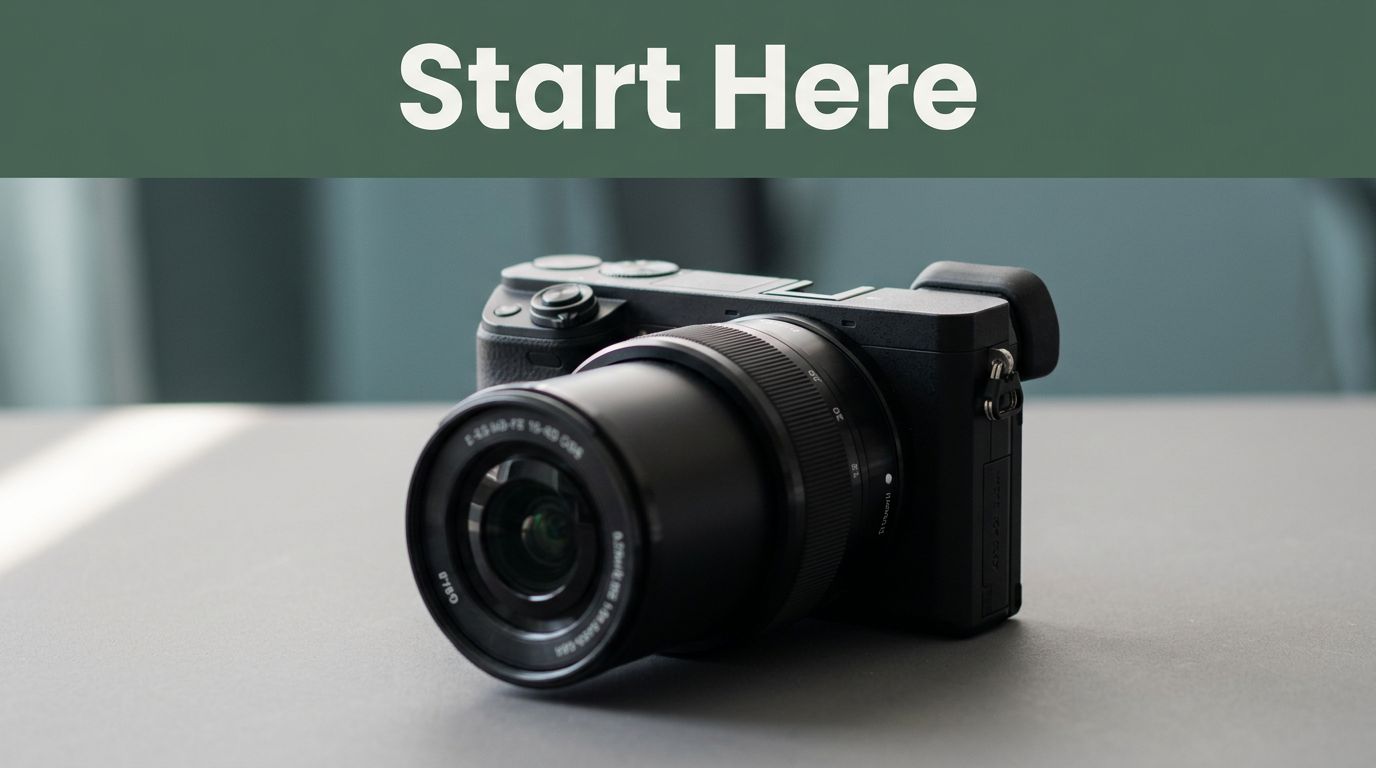
You just unboxed your first camera. Excitement hits hard. But then you see all those lens choices online. It feels overwhelming.
Your first lens sets the path. It shapes what you capture and how you learn. Most beginners stick with their kit lens at first. Experts push it because it’s free and versatile. In 2026, top picks include the kit zoom, a 50mm prime, and the Sigma 18-50mm f/2.8.
These options fit low budgets and build skills fast. They work on APS-C cameras like Sony or Canon models. Full-frame needs tweaks, but basics stay the same. Let’s break it down so you pick right.
Kick Off with Your Kit Lens: The Free Way to Learn Fast
Most cameras come with a kit lens. Think Sony 16-50mm or Canon 18-55mm on APS-C bodies. Nikon packs similar ones. No extra cost means you start shooting right away.
This zoom covers wide views to tighter shots. You grab landscapes at 16mm. Then zoom to 50mm for family portraits. It’s light, so you carry it everywhere. Practice turns basic snaps into solid photos.
Pros shine for newbies. Zero price tag frees your budget. Versatility handles daily life, from travel to kids playing. However, the f/3.5-5.6 aperture dims in low light. Still, it teaches core skills before upgrades.
Experts agree. Use it first to master framing and exposure. For example, Sony’s 16-50mm stays sharp enough for social media posts.

What Makes the Kit Lens Perfect for Your First Shots
Everyday scenes fit this lens best. Group photos at parties. Scenery on walks. Street views in town. You switch angles without swapping glass.
It cuts decision stress. No zoom means less fuss. Setup stays quick, so you shoot more. Video works well too. Steady zooms capture motion smooth.
Beginners win big here. You learn framing basics fast. Results build confidence without fancy gear.
Overcoming Kit Lens Limits Without Spending a Dime
Low light challenges the variable aperture. Raise ISO a bit. Hunt golden hour sun. A tripod steadies night shots.
Good light solves most issues. Practice aperture priority mode. You control depth that way. These tricks stretch the kit far.
Upgrade later if needed. For now, it covers 90% of starter needs.
Unlock Sharp Portraits and Low-Light Magic with a 50mm Prime
Step up to a 50mm f/1.8 prime. Prices hover at $200-300 for Sony, Canon RF, or Nikon Z. No zoom forces you to walk closer. That builds better composition habits.
The wide f/1.8 aperture grabs more light. Creamy backgrounds pop subjects. Indoor events glow. Night streets sharpen up.
Compact size slips in pockets. Sharpness rivals pricier glass. On APS-C, it acts like 75mm, perfect for headshots. Full-frame keeps true 50mm feel.
Pick Sony 50mm f/1.8 or Canon RF version. Reviews praise their value. For deeper options, check best 50mm lenses for 2026.
How the 50mm Teaches You to See Like a Pro Photographer
Foot zoom sharpens your eye. Move for the right frame. Control blur with aperture turns. Light play becomes second nature.
One newbie shot flat portraits with kit lens. Switched to 50mm. Results transformed to pro-level bokeh. Creativity sparks from limits.
Skills stick. You compose stronger across any lens.
Travel Light with Versatile Zooms Like the Sigma 18-50mm f/2.8
Sigma 18-50mm f/2.8 shines on APS-C like Sony A6700. Constant f/2.8 beats kit brightness. Sharper images flow in any light. Size stays pocketable at $400-500.
Zoom spans wide to portrait range. Travel packs one lens. Video stabilizes smooth. Weather sealing holds up on hikes.
Tamron 28-200mm offers superzoom alternative. But Sigma wins reviews for balance. See the PCMag review on Sigma 18-50mm for real tests.
On full-frame, seek wider like Sony 20-70mm. Crop factor changes APS-C views.
| Lens | Sensor | Price (2026) | Aperture | Zoom Range |
|---|---|---|---|---|
| Kit (e.g., Sony 16-50mm) | APS-C | $0-100 used | f/3.5-5.6 | 16-50mm |
| 50mm f/1.8 Prime | Full/APS-C | $150-300 | f/1.8 | Fixed |
| Sigma 18-50mm f/2.8 | APS-C | $400-500 | f/2.8 constant | 18-50mm |
This table shows trade-offs. Sigma edges kit in light and sharpness.
Why This Lens Wins for Busy Beginners on the Go
Vacations demand simplicity. One lens covers beaches to dinners. Hikes stay light. Events zoom flexible.
2026 reviews call it a budget pro tool. No bulk means more shooting.
Choose Your Starter Lens Based on Camera, Budget, and Shoot Style
Match to your setup. APS-C crop makes 50mm into 75mm. Full-frame stays standard.
Everyday? Kit rules, free. Portraits or low light? 50mm at $200. Travel? Sigma for $450.
| Style | Top Pick | Budget | Camera Fit |
|---|---|---|---|
| Basics/Daily | Kit Zoom | Free | All |
| Portraits/Low Light | 50mm Prime | $200-300 | APS-C/Full |
| Travel/Versatile | Sigma 18-50mm | $400-500 | APS-C |
Check mount first. Buy used for deals. Practice defines your choice. Skip early superzooms; they compromise quality.
Start simple. Your camera model matters, so test compatibility.
Kit builds basics. 50mm hones skills. Sigma adds versatility. Grab your kit if unsure. Shoot daily.
Comment your camera below for tips. Share your first photo. Ready? Your best lens is the one you use most. Capture the joy.