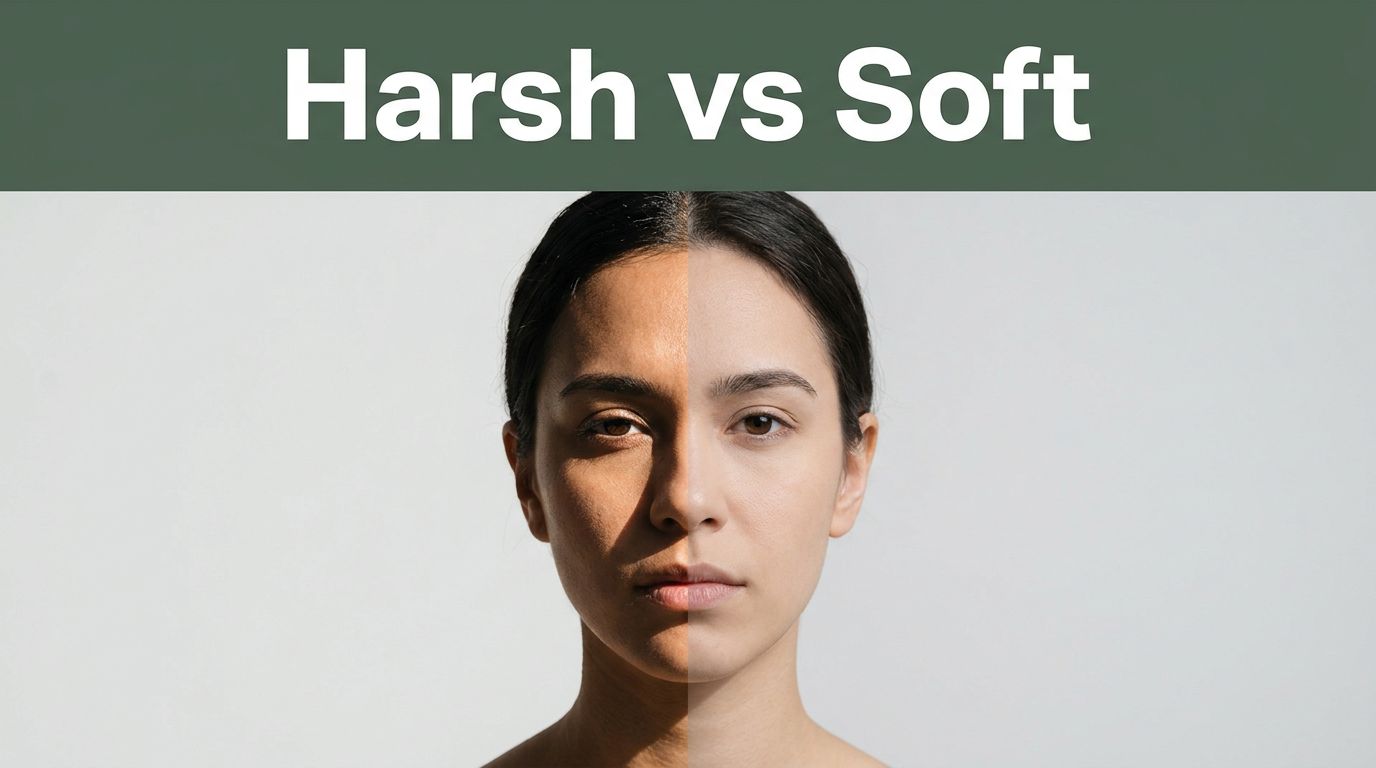
You step outside on a bright noon. Your subject’s face looks great at first glance. Then harsh shadows carve deep lines under the eyes and chin. That portrait flops.
Switch to an overcast day. The same face glows with even tones. No squinting. Shadows fade gently. The shot flatters everyone.
Harsh light comes from a small or distant source. It creates sharp shadows and high contrast. Soft light spreads from a large or nearby source. It delivers gentle shadows and balanced tones. Both shape your photos’ mood and quality. You gain control over drama or calm once you master them.
This post breaks it down. You’ll see the core differences. Then real-world examples. Next, mood impacts. Finally, pro tips to create either. Whether you’re shooting portraits or landscapes, these skills boost every frame.
Spot the Differences: What Makes Light Harsh or Soft
Light quality changes everything in photography. Harsh light hits hard. Soft light wraps around subjects. The main clues lie in shadows and contrast.
Here’s a quick comparison to spot them fast:
| Feature | Harsh Light | Soft Light |
|---|---|---|
| Shadows | Sharp, crisp edges; quick dark drop | Feathered, gradual transitions |
| Contrast | High; bright whites, deep blacks | Low; mostly mid-tones |
| Source | Small and far (noon sun, bare flash) | Large and close (clouds, softbox) |
| Mood | Dramatic, gritty, intense | Gentle, flattering, peaceful |
Think of a flashlight beam up close. It blasts harsh spots. Now picture room lights spread out. They fill space evenly. That’s the shift.
The inverse square law explains it. Light drops fast from small distant sources. Intensity halves every time distance doubles. So shadows turn hard. Large sources scatter rays. They soften the fall-off. For a deeper look at source size and distance, check Zoner Studio’s breakdown.

Shadows and Contrast: The Telltale Signs
Shadows reveal light type first. Harsh ones show hard edges. Light flips to dark in a snap. You see outlines clear as day.
Soft shadows blur at the edges. They feather out. Tones blend smooth. No stark lines.
Contrast follows suit. Harsh light pumps highs and lows. Whites blow out. Blacks crush deep. Drama builds fast.
Soft light evens it. Mid-tones dominate. Faces look balanced. Skin stays natural.
Next time you shoot, check shadow edges on your subject. Sharp means harsh. Fuzzy signals soft. This tip works outdoors or in studio.
Light Source Secrets: Size and Distance Matter Most
Size rules light quality. Small sources act pointy. Like the sun at noon, far up and tiny from ground view.
Large sources wrap light around. Clouds turn sky into a giant diffuser. Rays scatter every way.
Distance amps it. Pull a light back, even strong ones. Harshness grows because fall-off speeds up. Keep it close for softness.
Position counts too. Side light from small sources bites harder. Frontal big light flatters more.
Real-Life Examples of Harsh and Soft Light Everywhere
You spot these lights daily. No fancy gear needed. Just look around.
Harsh shows in midday blasts or spotlights. Soft hides in clouds or windows. Each sets a photo mood.
Take a walk tomorrow. Hunt them. Your eye tunes in quick.
For side-by-side photo examples, see Narrative’s lighting guide.
When the Sun Bites Back: Harsh Light Hotspots
Midday sun on clear days screams harsh. Shadows dig under noses and brows. Textures pop sharp.
Bare flash does it too. Direct strobe from camera. Eyes go dark, cheeks glow hot.
Spotlights mimic this. Stage lights or car beams. Edges cut bold.
These suit unflattering skins sometimes. Yet they build edgy looks. Action shots or black-and-white thrive here. Grit rules.

Nature’s Soft Touch: Everyday Soft Light Gems
Overcast skies gift perfect soft light. No direct rays. Even glow wraps subjects.
Golden hour softens too. Sun low, filtered by air. Warm tones hug gentle.
Cloud diffusion works magic. Thin cover scatters sunbeams. Shadows stay light.
Windows indoors count. North-facing ones steady soft all day. Bounce off walls adds fill.
These smooth flaws. Portraits shine romantic. Weddings and newborns love the peace.

How Harsh and Soft Light Shape Your Photo’s Mood and Impact
Light picks your story’s tone. Harsh cranks intensity. Soft calms it down.
Choose based on goal. Drama or ease? Each has strengths and traps.
Harsh spotlights textures. Wrinkles show raw. Muscles define sharp. Great for bold feels.
Soft hides bumps. It evens tones. Peace flows natural.
Balance them right. Your shots gain depth.
Dramatic Edges from Harsh Light (Pros and Watch-Outs)
Harsh light carves form. Fabrics wrinkle real. Faces gain character.
It amps mood high. Sports freeze with punch. Film noir vibes emerge dark.
Yet watch skin. Blemishes glare. Eyes sink black. Overexposure clips highlights.
Use for action. Athletes mid-jump pop. Textures tell tales.
Flattering Evenness with Soft Light (When It Shines)
Soft light smooths fast. Wrinkles fade. Colors blend warm.
Romance builds easy. Couples glow close. Babies look angelic.
Portraits win big. Weddings stay timeless.
But it can flatten. No pop without edges. Add fill for life.
Hands-On Tips: Create and Control Harsh or Soft Light Like a Pro
Gear helps control. You shape light on demand.
Start simple. Distance tweaks work free. Modifiers build pro looks.
March 2026 trends favor portable LEDs. Models like Nanlite FS-300B offer full-spectrum evenness. Godox V1 packs soft punch rechargeable. AI apps now diffuse post-shot too.
Experiment. Note what clicks.
Gear and Setup for Punchy Harsh Light
Keep sources small. Bare speedlight far off. Grids narrow the beam.
- Mount flash bare. No diffuser.
- Position 10 feet back. Angle side-low.
- Shoot at f/8. Capture edge.
Edgy portraits texture up. Pros hit drama. Cons risk hot spots. Balance with fill.
Quick Fixes for Dreamy Soft Light Anywhere
Go big and close. Umbrellas or softboxes shine.
- Set large softbox near. 3-5 feet out.
- Bounce off white wall. Or use diffusion cloth.
- Shoot wide aperture. f/2.8 blends tones.
Flattering shots forgive flaws. Cons lack bite sometimes.

Blend Both Lights for Next-Level Photos
Mix harsh key with soft fill. Drama stays, flats vanish.
- Harsh main from side. Small light far.
- Soft fill opposite. Half power bounce.
- Tweak ratios. 4:1 keeps edge.
Portable LEDs track subjects now. AI restores skin tones real-time. Hybrids rule 2026 shoots.
Master Light, Elevate Every Shot
Harsh and soft light differ in shadows, sources, and mood. Harsh cuts sharp for drama. Soft wraps gentle for calm.
Use tips to craft either. Blend for best results. Spot them outdoors. Tweak with gear indoors.
Grab your camera next shoot. Check shadows first. Note what works.
Share your harsh or soft examples in comments. Which do you prefer? Try a hybrid setup. Subscribe for more lighting hacks. Small changes yield big photo wins.