
You snap a portrait, and the background melts into a soft blur. Then you shoot a landscape, where rocks in front and clouds above stay razor sharp. Aperture in photography makes those differences happen.
It acts as the adjustable hole in your camera lens. This controls light entry and which parts of the image stay sharp. Beginners often guess at settings. They end up with dark shots or fuzzy details.
You want brighter images and pro focus. This guide breaks it down. We cover f-stops, light control, depth of field, and bokeh. Plus tips for portraits, landscapes, macro, and fixes for common errors. Ready to dial in sharper, brighter photos?
Aperture Explained: The Lens Opening That Controls Light and Focus
Think of aperture like your eye’s pupil. It widens in dim light to grab more brightness. It narrows in sun to avoid glare. Your lens does the same with overlapping blades.
These form a circle inside the lens. They open wide or close tight. F-stops measure the size. A small number like f/2.8 means a big opening. More light pours in. A big number like f/16 means a small hole. Less light reaches the sensor.
Each full stop change doubles or halves light. Go from f/4 to f/2.8, and light intake doubles. Fast lenses hit wide max apertures like f/1.4. They shine in low light.
Most lenses top out narrower. They have limits based on design. Find the sweet spot around f/5.6 to f/8. Lenses peak in sharpness there.
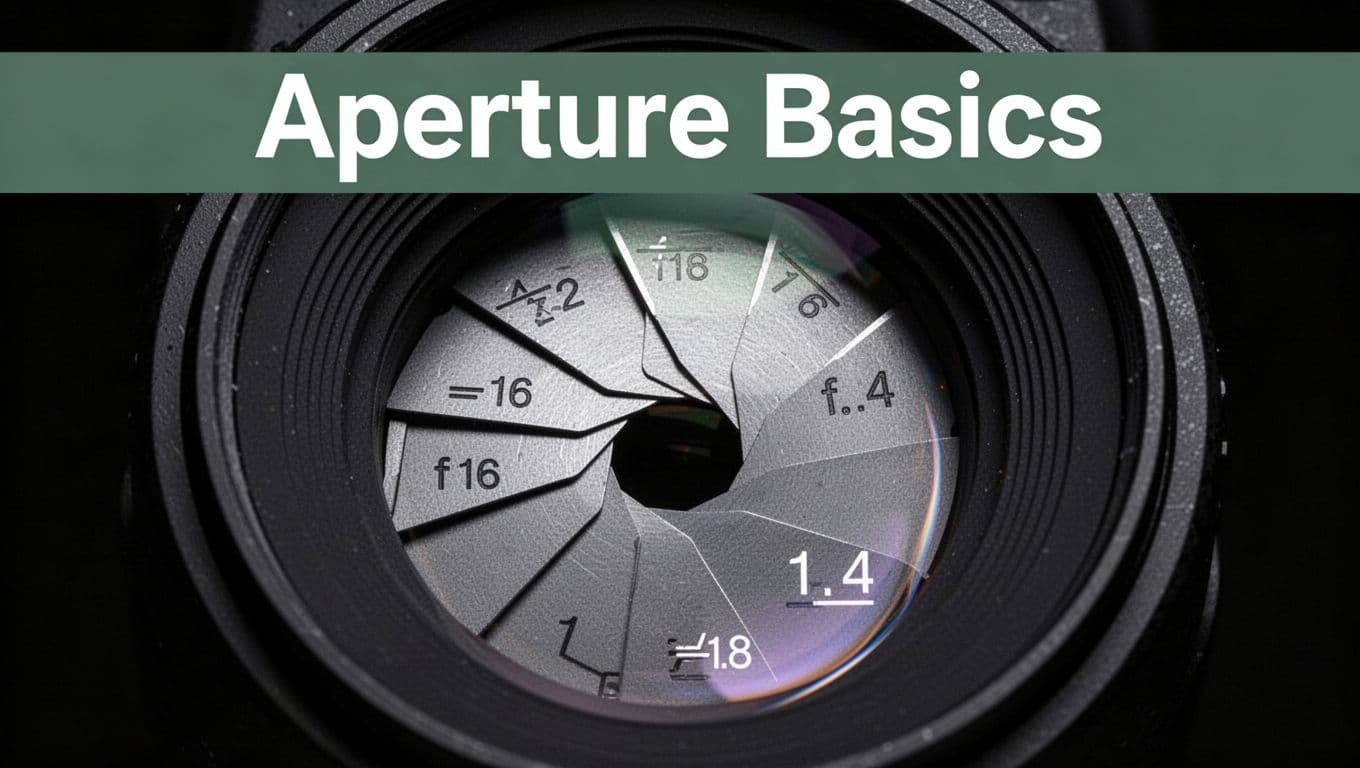
Common f-stops follow this sequence: f/1.4, f/2, f/2.8, f/4, f/5.6, f/8, f/11, f/16, f/22. For a full breakdown on f-stops, check Photography Life’s guide.
Cracking the Code of F-Stop Numbers
Smaller f-numbers confuse new shooters. Why does f/1.4 let in far more light than f/22? Each step halves the opening area. Light follows suit.
Take f/2 versus f/4. The f/4 hole carries half the light of f/2. You compensate by raising ISO. Or slow the shutter speed. Your camera dial shows these marks. Spin to f/5.6 for everyday starts.
Here’s a quick table of light relative to f/1:
| F-Stop | Relative Light |
|---|---|
| f/1 | 1 |
| f/2 | 1/2 |
| f/4 | 1/4 |
| f/8 | 1/8 |
| f/16 | 1/16 |
This table sets context for exposure choices. It shows why wide opens brighten fast shots. In short, master numbers for control.
How Aperture Directly Impacts Your Photo’s Brightness and Exposure
Aperture joins shutter speed and ISO in the exposure triangle. It decides light volume on the sensor. Wide settings like f/2.8 flood in brightness. You freeze action indoors or at dusk.
Narrow ones like f/16 block most light. They suit sunny scenes. But you pair with quick shutters or higher ISO. Otherwise, shots go dark.
Picture a concert. At f/4, performers glow under stage lights. Switch to f/8 without tweaks, and shadows swallow them. Balance all three sides. Check your meter for even tones.
Adobe explains f-stops in their photography overview. Wide apertures speed up shots. They cut blur from hand shakes too.
Aperture’s Role in Depth of Field and That Creamy Blur Effect
Depth of field marks the sharp zone front to back. Aperture sets its width. Go wide at f/2, and only your subject pops. Background fades soft.
Narrow at f/11, and everything snaps into focus. Other factors play in. Get closer to subjects, and depth shrinks. Long lenses narrow it more.
Bokeh describes that pleasing blur. Wide apertures create round, smooth highlights on lights or leaves. Best at f/1.4 to f/2.8. Quality lenses round them best.
Diffraction creeps in at extremes. Past f/22, light bends. The whole image softens. Cap at f/11 most times.
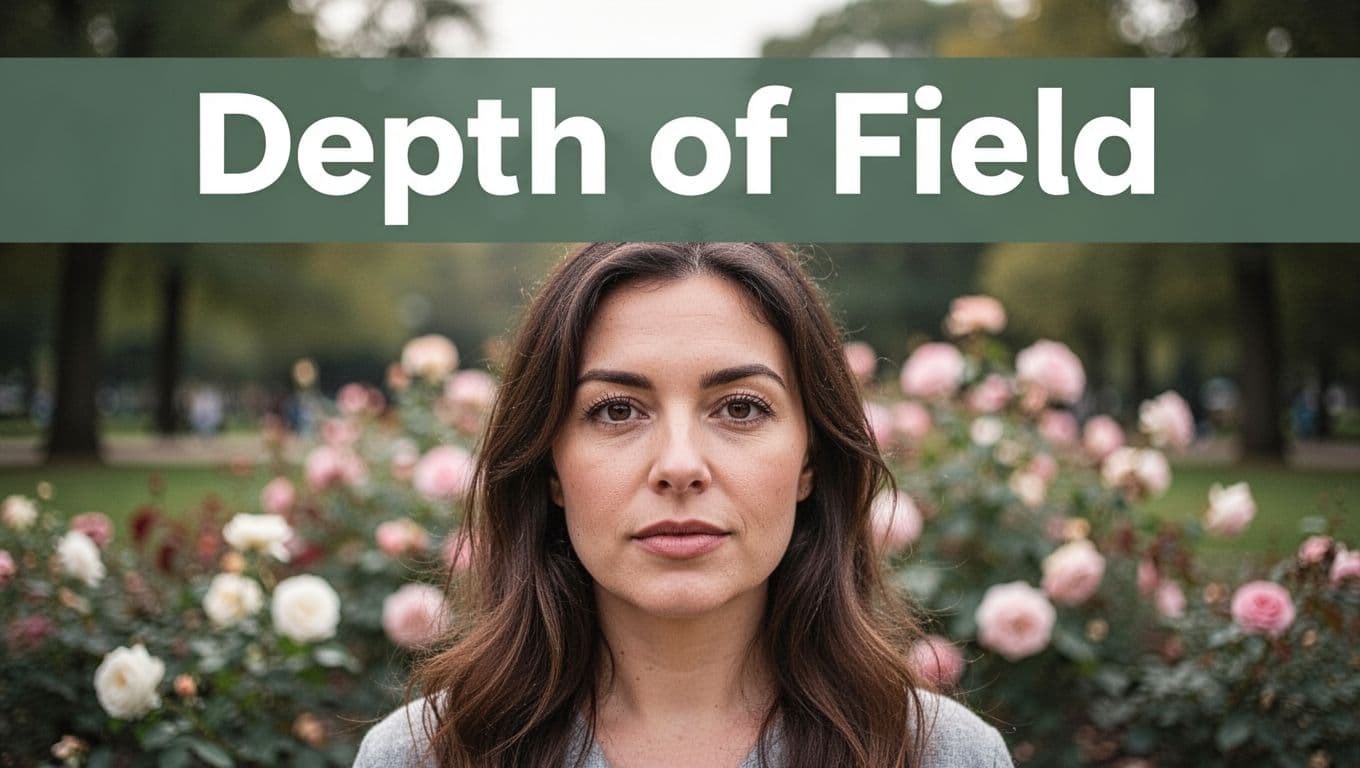

For depth tips, see PhotoPills’ guide.
Shallow Depth of Field: Isolating Your Subject Like a Pro
Set f/1.8 for portraits. Eyes lock sharp. Nose tip fades. Background turns dreamy. It hides mess behind.
Pair with 85mm lenses. Step closer. Distracting scenes vanish.
Deep Depth of Field: Capture Every Detail from Near to Far
Dial f/8 to f/16. Foreground blooms match distant peaks. Layers stack crisp.
Compositions span distances. All elements pull equal weight.
Achieving Beautiful Bokeh with the Right Aperture
Open wide against busy backs. Lights morph into soft circles. Test at f/2.
Cheap lenses make harsh shapes. Smooth ones deliver cream.
Ideal Aperture Choices for Portraits, Landscapes, and Macro Photography
Match aperture to your scene. Portraits crave blur at f/1.8 to f/2.8. Faces pop free. Landscapes need f/8 to f/16. Full sharpness rules.
Macro fights tiny depths. f/11 to f/16 holds bug eyes and wings.
| Genre | Best Apertures | Why It Works |
|---|---|---|
| Portraits | f/1.8-f/2.8 | Cream blur isolates subjects |
| Landscapes | f/8-f/16 | Sharp front to back |
| Macro | f/11-f/16 | Counters close-up shallowing |
This table guides quick picks. Takeaways match your goals. In March 2026, trends favor fast f/1.8 to f/2.8 lenses from Sigma or Tamron. Vintage glass adds retro softness wide open.


Digital Photography School covers aperture for landscapes.
Portraits: Blur the Background to Highlight Faces
Singles love f/2. Groups need f/4. All stay in zone. Primes like 85mm excel. Low light handles easy.
Landscapes: Sharpness from Foreground to Horizon
f/11 hits sweet spots. Diffraction stays low. Use tripods for slow speeds.
Macro: Staying Focused on the Tiniest Subjects
f/13 to f/16 fights depth loss. Stack shots for more if needed.
Common Aperture Mistakes Beginners Make and Easy Fixes
Newbies think low f means less light. Wrong. Wide f/2.8 grabs tons. Use it indoors.
They blast wide open always. Groups blur at edges. Stop to f/5.6.
Extremes like f/22 soften via diffraction. Hug f/8 max.
Ignore sweet spots. Lenses shine mid-range. Check reviews.
Fixes work fast. Shoot manual mode. Peek at histograms. Review LCD zooms.
G10 Studio lists common errors. Practice builds skill.
Aperture masters light through f-stops. It shapes depth and bokeh. Pick right for portraits, landscapes, macro.
Basics hold in 2026. Vintage lenses trend for soft looks. Fast modern ones like f/1.8 rule low light. No big shifts.
Grab your camera. Try f/5.6 on tomorrow’s walk. Tweak one setting for epic results.
Experiment now. Share shots in comments. What aperture surprises you most? Subscribe for more tips. Your photos level up fast.