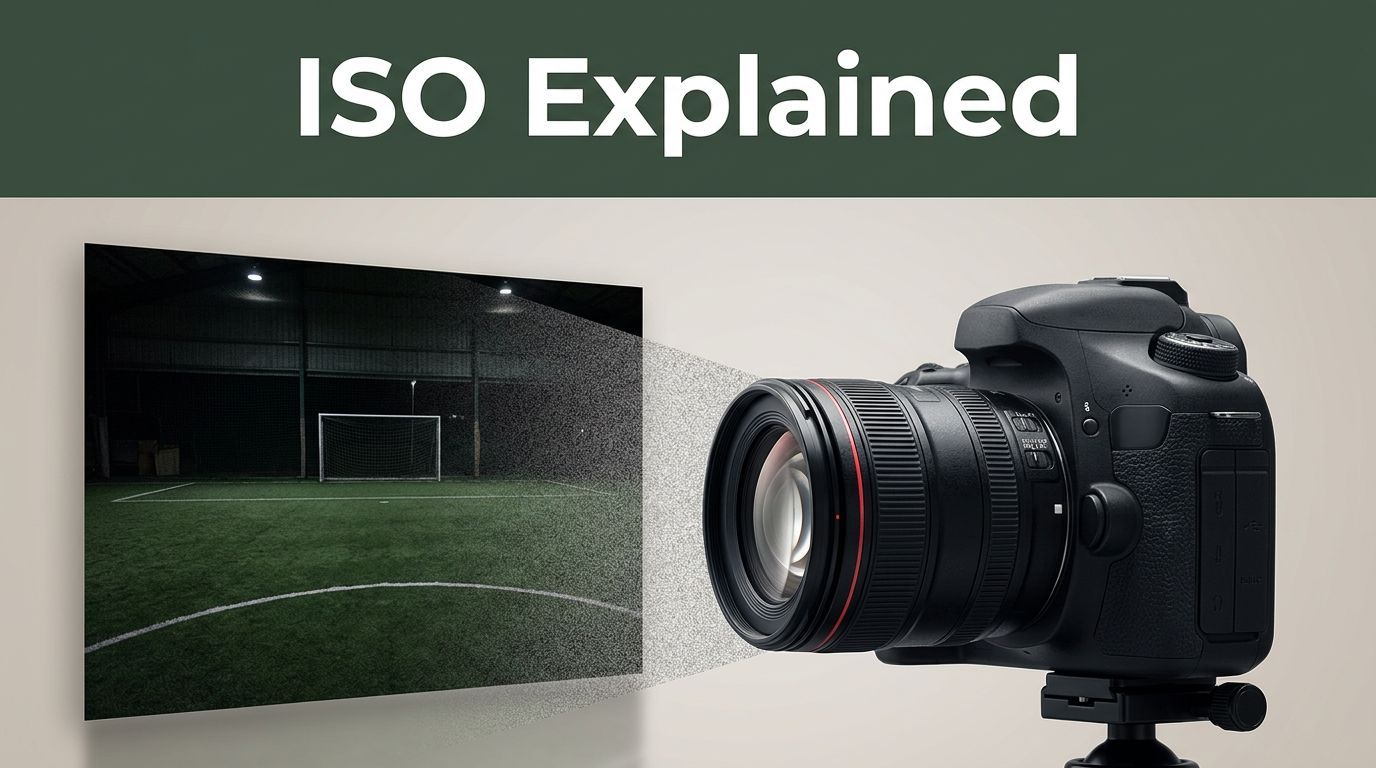
You snap a photo at your kid’s indoor soccer game. The action freezes, but speckles cover the image like old TV static. Frustrating, right? That noise comes from ISO, your camera’s light sensitivity setting. It acts like a brightness dial on your phone screen.
ISO works with shutter speed and aperture in the exposure triangle. Those three control how bright your photo turns out. Low ISO gives clean shots in bright light. High ISO saves dim scenes but adds grain.
This guide breaks it down. You’ll learn ISO basics, its team-up with other settings, noise effects, smart picks for scenes, and noise fixes. By the end, you’ll dial in pro-level images every time.
The Basics of ISO: From Film Days to Your Digital Camera
ISO measures how sensitive your camera sensor is to light. Numbers start at 100 and double: 200, 400, 800. Each step makes the sensor twice as responsive. So, ISO 400 captures the same brightness as ISO 100 with half the light.
Back in film days, ISO rated film speed. The International Organization for Standardization set those standards. Photographers switched films for light changes. Digital cameras kept the system. Now, you adjust ISO on the fly.
Think of ISO like a radio volume knob. Low settings stay clear in bright sun. Crank it up in shade, and static creeps in. Base ISO, often 100 or 200, delivers the cleanest files. Your camera manual lists it.
Most cameras handle up to 6400 or higher. Newer models push further with less noise. Stick to the lowest you need for sharp results.
Here’s a quick look at common values:
| ISO Setting | Brightness Multiplier from ISO 100 | Best For |
|---|---|---|
| 100 | 1x | Sunny outdoors |
| 200 | 2x | Bright shade |
| 400 | 4x | Overcast days |
| 800 | 8x | Indoor events |
| 1600 | 16x | Dim evenings |
| 3200 | 32x | Concerts, night |
This table shows doubling. Use it as a cheat sheet.
Why ISO Numbers Double and What That Means for Brightness
Each double jumps sensitivity. Go from ISO 100 to 200. Your photo brightens by one full stop. That’s like doubling light.
Picture a sunset shot. You set f/8 aperture and 1/125 shutter. At ISO 100, it’s too dark. Bump to 200. Now it matches perfect exposure. No other changes needed.
Beginners love this. It rescues underexposed frames fast. However, higher numbers trade quality. Keep it simple. Test in manual mode.
For more on ISO origins, check this beginner’s full guide.
ISO in the Exposure Triangle: Teaming Up with Shutter Speed and Aperture
Exposure comes from three parts: ISO, shutter speed, and aperture. Shutter speed sets how long light hits the sensor. Fast like 1/1000 stops motion. Slow like 1/30 risks blur.
Aperture controls the lens opening. Wide f/2.8 lets in lots of light but blurs backgrounds. Narrow f/11 keeps more sharp but needs extra light.
ISO adjusts sensitivity. Balance them for right brightness. Raise ISO when you need fast shutter or deep focus. It’s your flexible friend.
Imagine a seesaw. Push one side down, others rise. Lower shutter speed? Drop ISO to compensate. That keeps exposure even.
In practice, it shines. For family portraits indoors, use f/4 for soft backgrounds. Set 1/125 shutter to freeze smiles. Dial ISO to 400 if light fades.
This teamwork unlocks creativity. Master it, and auto mode feels limiting.
Learn the full exposure triangle from this detailed breakdown.
Real-World Examples of Balancing Your Settings
Bright landscapes work at ISO 100. Tripod lets slow shutter like 1/60. Everything stays crisp.
Sports demand fast action. Kids run at soccer. You pick 1/500 shutter. Dim gym means ISO 1600. No blur, decent quality.
Concerts mix it up. Wide f/2.8 grabs stage light. 1/200 shutter catches jumps. ISO 3200 fills shadows. Adjust as lights pulse.
Practice shifts your eye. Start with one change. Watch results. Soon, you’ll predict balances.
How ISO Affects Your Photo’s Look: Noise, Grain, and Beyond
Higher ISO brightens images. But it amplifies everything. Clean signals get stronger. So do flaws. That creates noise: random color dots and brightness specks.
Low ISO keeps skies smooth. Bump to 6400, and they speckle. Shadows suffer most. Noise hides details there.
Grain mimics old film texture. Digital noise feels harsher, like static. It softens sharpness. Colors lose punch.
Dynamic range drops too. Highlights blow out fast. Shadows turn black mush. Low ISO holds more detail across tones.
Colors shift slightly. High ISO washes them. Skin tones look flat.
Modern sensors help. Early 2026 tech like Sony’s LOFIC pixels cut noise 27% in low light. Canon’s SPAD boosts range to 156 dB. Your camera benefits.
Still, lowest ISO wins for quality.
Understanding Noise and Grain in High ISO Shots
Noise dots ruin smooth areas. Blue sky at ISO 100 glows even. At 3200, multicolored flecks invade.
Shadows amplify it. Less light means weaker signal. Noise ratio worsens.
Grain adds texture. Some like it for mood. Most hate digital versions. They distract from subjects.
See fixes in this photo noise guide.
Dynamic Range and Color Shifts from ISO Changes
High ISO clips extremes. Bright skies lose clouds. Dark corners muddle.
Range shrinks from 14 stops at base to 9 at 6400. Detail vanishes.
Colors desaturate. Reds mute. Blues gray out. Edit RAW helps recover some.
Test your gear. Shoot same scene at ranges. Compare files.
Picking the Right ISO for Bright Days, Dim Rooms, and Fast Action
Start low. Raise only as needed. Quality drops above base.
Sunny beaches: ISO 100. Landscapes thrive.
Cloudy hikes: 200-400. Keeps handheld sharp.
Indoor parties: 400-800. Bounce flash if possible.
Sports nights: 1600-3200. Fast shutter rules.
Astrophotography: 3200-6400+. Tripod essential.
Guide table:
| Lighting | Recommended ISO | Tips |
|---|---|---|
| Full sun | 100-200 | Slow shutter ok |
| Shade | 200-400 | Watch for blur |
| Indoors | 400-800 | Steady hold |
| Events | 800-1600 | Wider aperture |
| Night action | 1600-6400 | Stabilize |
Use lowest for best files. Check histogram.
This essential ISO guide covers scenarios.
Low Light Survival: When to Crank Up ISO Without Ruining Shots
Dim rooms start at 400. Shutter drops below 1/60? Go to 800.
Brace elbows. Lean on walls. Or grab tripod. That lets lower ISO.
Pair with f/2.8 lens. More light means less boost.
Freezing Sports and Motion with Smart ISO Choices
Kids’ games need 1/500+. Gym lights dim? Hit ISO 1600.
Practice panning. Follow subject. Sharp player, blurred crowd.
Test bursts. Pick cleanest frame.
5 Easy Ways to Cut Noise and Boost Quality at High ISO
- Open aperture wide. f/1.8 doubles light over f/4. Lower ISO follows.
- Use tripod. Slow shutter to 1/15 drops ISO 800 to 200. Crisp results.
- Shoot RAW. Edit room recovers shadows without extra noise.
- Hold steady. Tuck elbows. Exhale slow. Sharp at higher speeds.
- Edit smart. Lightroom sliders tame grain. AI tools like Topaz cut more.
Tech advances help too. 2026 sensors handle high ISO cleaner. Experiment now.
Ready to Nail ISO for Sharper Shots?
ISO boosts light sensitivity. It balances exposure with shutter and aperture. High values add noise but save tough scenes. Pick lowest possible. Use tips to fight grain.
Grab your camera next outing. Dial base ISO first. Adjust as light shifts. Watch quality soar.
Share your high-ISO wins in comments. What scene challenges you most? Shoot better today.